The Bush Tragedy by Jacob Weisberg
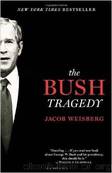
Author:Jacob Weisberg
Language: eng
Format: mobi
Publisher: Random House Publishing Group
Published: 2008-01-15T05:00:00+00:00
AS FAR AS ROVE was concerned, Bush’s reelection as governor was merely a warm-up drill for the presidential campaign that would begin immediately afterward. Victory was a foregone conclusion, so 1998 became a test of how far Bush could reach into the other side’s pocket. Bush won with 69 percent of the vote, and hit Rove’s benchmarks by winning 27 percent of the black vote and 49 percent of the Hispanic vote. Nearly winning a Latino majority represented a real achievement for a Republican. In a year when Clinton’s impeachment caused Republicans to lose congressional seats nationally, Republicans swept all of Texas’s eighteen statewide offices. Eliminating Democrats meant that Rove’s work in Texas was finished. The state’s political realignment was complete.
Once, when he was asked if the Republican takeover in Texas would have been possible without George W. Bush, Rove told the journalist Wayne Slater, “If George W. Bush didn’t exist we’d have to find a way to create somebody like him.” It’s a revealing admission, both about Rove’s view of Bush as a vehicle and in its suggestion of an agenda that went beyond the candidate. Rove’s new goal wasn’t just to elect George W. Bush president. It was to do nationally what he had done in Texas: develop the kind of political machine that would ensure Republican dominance for decades to come. Having directed one blockbuster, Rove naturally wanted to cast his leading man in the even bigger sequel.
As someone who sees politics in historical terms, Rove was constantly looking to other campaigns that might provide him with a transformational paradigm. The two most obvious examples to consider were FDR’s 1932 victory and Ronald Reagan’s in 1980. But neither of these was quite right. Roosevelt arrived at a moment of crisis, and reordered American politics by fundamentally changing the role of the federal government, circumstances that hardly pertained to a Republican in 1998, at the height of an economic boom. Nineteen eighty provided a better model, but that conception was too limited. Rove wanted Bush to lead a political transformation of his own, not just complete the work of a predecessor. He thought the pattern to follow might be the rise of the conservative hero Theodore Roosevelt, who shared his candidate’s youthful vigor and ability to appeal across the political spectrum.
Testing his Bush–as–Teddy Roosevelt hypothesis might also satisfy Rove’s perpetual quest for academic credentials, Rove had applied and been accepted to the Ph.D. program at the University of Texas government department. But in 1998, he still lacked sufficient credits for a BA, the requirements of which included a research essay. Rove had already written a paper about Wendell Willkie, the 1940 Republican presidential nominee, but for bureaucratic reasons, he couldn’t count it toward his degree. So in the spring of 1998, while running one Bush campaign and conceptualizing another, he enrolled for the second time in a U of T writing seminar with the intention of examining Teddy Roosevelt’s role in the 1896 presidential election.
The adviser Rove found for his paper was Lewis L.
Download
This site does not store any files on its server. We only index and link to content provided by other sites. Please contact the content providers to delete copyright contents if any and email us, we'll remove relevant links or contents immediately.
| U.K. Prime Ministers | U.S. Presidents |
Waking Up in Heaven: A True Story of Brokenness, Heaven, and Life Again by McVea Crystal & Tresniowski Alex(37815)
Empire of the Sikhs by Patwant Singh(23090)
We're Going to Need More Wine by Gabrielle Union(19053)
Hans Sturm: A Soldier's Odyssey on the Eastern Front by Gordon Williamson(18596)
Leonardo da Vinci by Walter Isaacson(13341)
The Radium Girls by Kate Moore(12036)
Tools of Titans by Timothy Ferriss(8403)
Educated by Tara Westover(8060)
How to Be a Bawse: A Guide to Conquering Life by Lilly Singh(7493)
Permanent Record by Edward Snowden(5852)
The Last Black Unicorn by Tiffany Haddish(5643)
The Rise and Fall of Senator Joe McCarthy by James Cross Giblin(5284)
Promise Me, Dad by Joe Biden(5157)
The Wind in My Hair by Masih Alinejad(5103)
A Higher Loyalty: Truth, Lies, and Leadership by James Comey(4967)
The Crown by Robert Lacey(4820)
The Iron Duke by The Iron Duke(4367)
Joan of Arc by Mary Gordon(4117)
Stalin by Stephen Kotkin(3973)
